Founding Fathers on US Currency: Who Made It Onto Money and Why

Open your wallet and you are carrying a pocket-sized gallery of early American history. But which faces belong to actual Founding Fathers — and which do not? The answer is more surprising than most people expect.

Which Founding Fathers Are on Paper Money?

Five men appear on modern Federal Reserve Notes. Three of them signed the Declaration of Independence or helped draft the Constitution. Two have no business being called “Founding Fathers” at all.

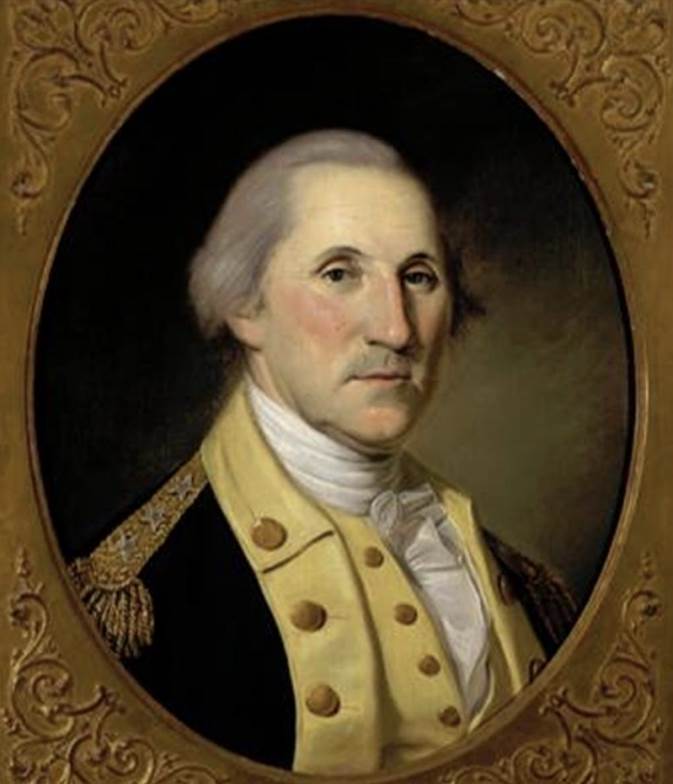
George Washington portrait
$1 Bill

George Washington

On the dollar bill since 1869

Washington has anchored the one-dollar Federal Reserve Note since 1869, and for good reason: he commanded the Continental Army through eight years of war, presided over the Constitutional Convention, and served as the first president of the United States from 1789 to 1797.

His portrait replaced the Salmon P. Chase version of the greenback after the Civil War, and it has stayed put ever since — the longest-running portrait on any piece of American currency.
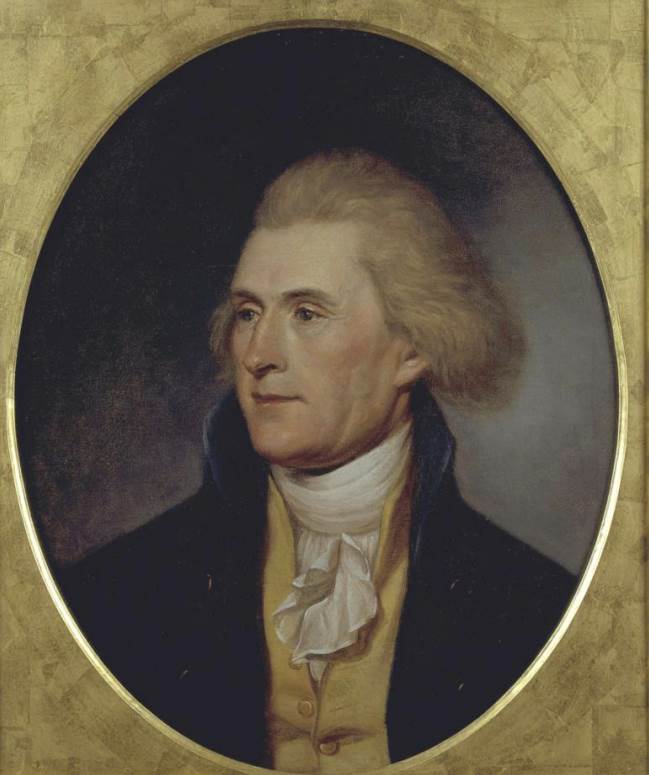
Thomas Jefferson portrait
$2 Bill

Thomas Jefferson

On the two-dollar bill since 1869

Jefferson appears on the front of the famously rare $2 bill. The reverse side reproduces John Trumbull’s painting of the Signing of the Declaration of Independence — fitting, since Jefferson was its principal author.

As the third president, Jefferson doubled the size of the country with the Louisiana Purchase and founded the University of Virginia. The $2 bill has been printed in several series but never circulates widely, which makes it both a curiosity and a collector’s favorite.

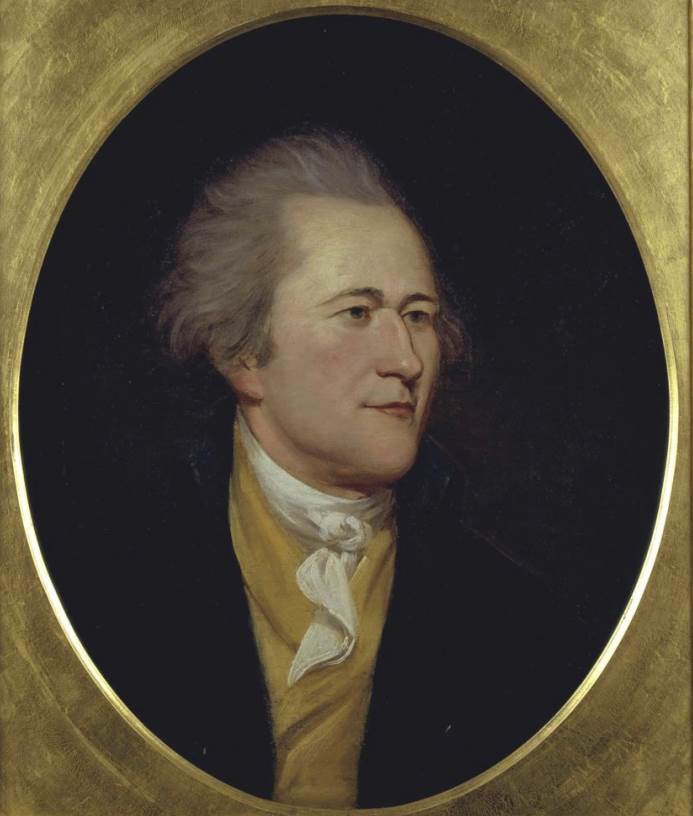
Alexander Hamilton portrait
$10 Bill

Alexander Hamilton

On the ten-dollar bill since 1928

Hamilton earned his place on the $10 bill the hard way: he built the American financial system from scratch. As the first Secretary of the Treasury under Washington, he established the national bank, took on state Revolutionary War debts to consolidate federal credit, and laid the groundwork for Wall Street.

Not a president. Hamilton is one of only two non-presidents on modern U.S. paper currency. Born in the West Indies and killed in a duel with Aaron Burr in 1804, he never held elected executive office — but his influence on the country’s financial architecture rivals that of any president.
Not a
Founder
$20 Bill

Andrew Jackson Not a Founding Father

On the twenty-dollar bill since 1928

Andrew Jackson sits on the $20 bill, but the Tennessee frontiersman did not enter national politics until 1824 — decades after the founding era had closed. He became the seventh president in 1829.

Why the confusion? Jackson’s populist style and military fame get him lumped in with the revolutionary generation, but he was a child during the Revolution and took no part in drafting the Declaration, the Articles of Confederation, or the Constitution.
Not a
Founder
$50 Bill

Ulysses S. Grant Not a Founding Father

On the fifty-dollar bill since 1914

Grant was born in 1822 — nearly forty years after the Constitution was ratified. His claim to the bill comes from his leadership of the Union Army during the Civil War and his two terms as the eighteenth president during Reconstruction. He was a transformative figure, but firmly a product of the nineteenth century, not the eighteenth.

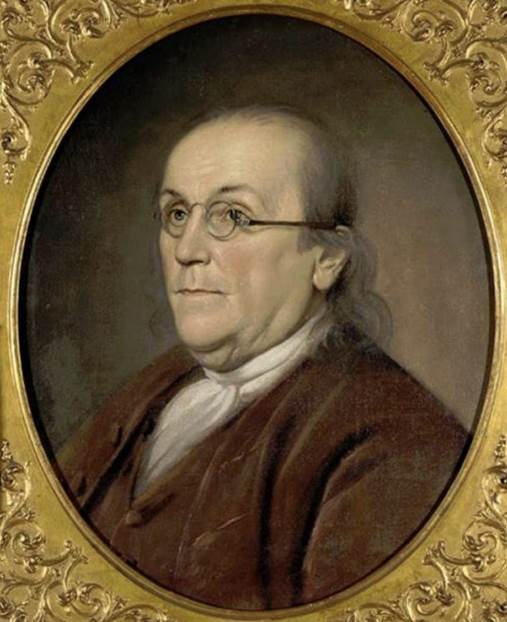
Benjamin Franklin portrait
$100 Bill

Benjamin Franklin

On the hundred-dollar bill since 1914

Franklin is the oldest signer of the Declaration of Independence — he was seventy in 1776 — and arguably the most internationally famous American of his century. As a diplomat in Paris, he secured the French alliance that won the war. As an inventor, he gave the world the lightning rod, bifocals, and the Franklin stove.

Not a president. Like Hamilton, Franklin never served as president. He was too old by the time the office existed, and his genius ran toward science, publishing, and statecraft rather than executive administration. Still, his face on the largest commonly circulated denomination feels appropriate for a man who proved that cleverness could build a fortune.

Which Founding Fathers Are on Coins?

American coins carry a different mix of faces. Some are founders, some are twentieth-century presidents, and one carries a symbol instead of a person.

Thomas Jefferson portrait
Nickel (5¢)

Thomas Jefferson

On the nickel since 1938

Jefferson replaced the buffalo nickel in 1938, and his Virginia plantation Monticello has appeared on the reverse almost continuously since then. He is the only Founding Father to appear on both a bill and a coin currently in wide circulation.

Not a
Founder
Dime (10¢)

Franklin D. Roosevelt Not a Founding Father

On the dime since 1946

FDR was born in 1882. The dime honors his presidency and his role in founding the March of Dimes, the polio-fighting organization. He has no connection to the founding era whatsoever.

George Washington portrait
Quarter (25¢)

George Washington

On the quarter since 1932

Washington debuted on the quarter in 1932 to mark the 200th anniversary of his birth. Like Jefferson, he holds the rare distinction of appearing on both paper money and a circulating coin. The reverse has gone through several redesigns — from the eagle to the 50 State Quarters series to the American Women Quarters program — but Washington’s profile has not changed.

Not a
Founder
Half Dollar (50¢)

John F. Kennedy Not a Founding Father

On the half dollar since 1964

Kennedy was assassinated in November 1963. Congress authorized the half-dollar redesign within weeks, and the new coin entered circulation in March 1964. Born in 1917, Kennedy was a twentieth-century figure with no connection to the founding period.

Founding Fathers NOT on Any Currency

Some of the most consequential figures from the founding era have never appeared on a single piece of American money. Their contributions shaped the republic just as deeply as the faces on the bills — in some cases more so — but treasury officials simply never selected them.

Madison’s absence may be the strangest. The man who drafted the Constitution and the Bill of Rights — the structural blueprint of American government — has never appeared on any circulating federal currency. John Adams, who championed independence in Congress and steered the treaty that ended the Revolutionary War, is likewise absent. John Hancock’s flamboyant signature is a cultural icon, but his face has never graced a coin or bill.

Why Is Hamilton on the $10 Bill?

Alexander Hamilton never served as president. He was not born in what became the United States. He died at forty-nine in a duel. And yet he occupies the ten-dollar bill, and the reason is straightforward: more than any other single person, he invented the American financial system.

When George Washington appointed him the first Secretary of the Treasury in 1789, the new nation was broke. It owed enormous sums to foreign lenders, to its own soldiers, and to citizens who had bought revolutionary bonds that were now trading at pennies on the dollar. Individual states carried their own separate debts, and there was no unified credit.

Hamilton solved all of it. He proposed that the federal government assume state debts — a controversial move that Thomas Jefferson and James Madison resisted until Hamilton traded away the location of the permanent capital in exchange for their votes. He established the First Bank of the United States, created a system of customs revenue, and published three landmark reports that became the foundation of American fiscal policy.

His reward was a place on the ten-dollar note beginning in 1928, when the Treasury standardized portrait selections across all denominations. The selection criteria were never purely about the presidency; they rewarded foundational contributions to the republic. By that standard, Hamilton earned his spot.

Did Any Founding Father Refuse to Be on Currency?

Not exactly — because putting real people on federal currency did not begin until the 1860s, decades after every Founding Father had died. But the question touches on something real: several founders, George Washington most of all, were deeply uncomfortable with anything that smelled of monarchy.

During the Revolution, the Continental Congress issued currency decorated with allegorical figures — Liberty, Justice, industry scenes — never portraits of living people. Washington himself actively discouraged anything that smacked of royal imagery. He rejected proposals to put his likeness on coins, wearing military uniforms that resembled European royalty, or accepting titles beyond “Mr. President.”

Thomas Jefferson shared this instinct. In an 1805 letter, he wrote that he disapproved of “everything which might lead our citizens to imagine that real honors could be derived from any other source than the suffrage of their fellow-citizens.”

The shift to portrait currency during and after the Civil War was driven by practicality — engraved portraits were harder to counterfeit than generic designs — not by a change of heart among long-dead founders. By the time Washington’s face appeared on the $1 bill in 1869, he had been dead for seventy years.

Quick reference

Actual Founding Fathers on money: George Washington ($1 bill, quarter), Thomas Jefferson ($2 bill, nickel), Alexander Hamilton ($10 bill), Benjamin Franklin ($100 bill).
Not Founding Fathers: Andrew Jackson ($20), Ulysses S. Grant ($50), Franklin D. Roosevelt (dime), John F. Kennedy (half dollar).

Go Beyond the Faces on the Bills

The portraits on your money are starting points. Explore the full stories of the founders who shaped the country — and chat with them directly.

Explore All Founders